

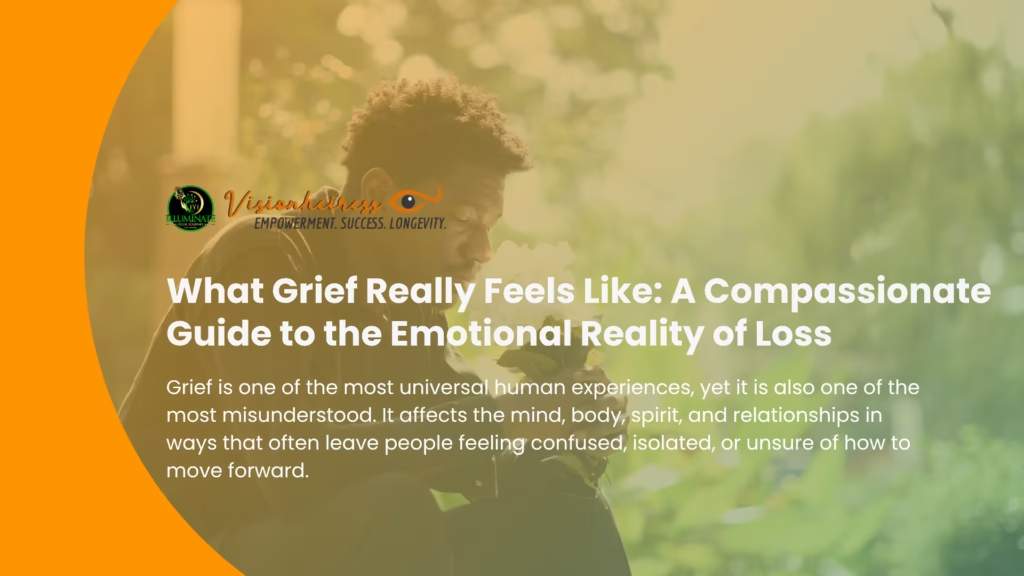
What Grief Really Feels Like: A Compassionate Guide to the Emotional Reality of Loss
- LaTanya Edenburgs
- Grief & Loss
What does grief really feel like and why is it so hard to explain?
Many people search for answers to this exact question, especially in the early days of loss when emotions are overwhelming and unpredictable. If you’ve ever wondered, “Why does grief feel like this?” or “Is what I’m feeling normal?” you are not alone.
Grief is one of the most universal human experiences, yet it is also one of the most misunderstood. It affects the mind, body, spirit, and relationships in ways that often leave people feeling confused, isolated, or unsure of how to move forward. While grief looks different for everyone, there are shared emotional experiences that help us understand what grief really feels like—and why it impacts us so deeply.
As someone who has spent more than 25 years guiding individuals, families, and communities through their healing journey, I’ve seen firsthand how powerful it is when people finally feel seen in their grief. Understanding the emotional truth of loss is the first step toward reclaiming your voice, your identity, and your peace.
This guide is here to gently walk you through what grief can feel like and remind you that whatever you’re experiencing, you are not alone.
Why Understanding What Grief Feels Like Matters
Many grieving individuals ask themselves:
- “Why does my body feel heavy?”
- “Why am I so angry?”
- “Why do I feel numb sometimes?”
- “Why does it feel like I’m losing parts of myself?”
Grief is not just sadness. It is a full-body, whole-self response to losing someone or something deeply meaningful. Understanding the emotional experience of grief helps you:
- Normalize your feelings
- Reduce shame or confusion
- Recognize your needs
- Learn compassion toward yourself
- Move toward healing at your own pace
When you understand what grief feels like, you begin to reclaim the power grief tries to take from you.
What Grief Really Feels Like (And Why It Feels That Way)
Grief feels different for everyone but there are common emotional experiences that many people share. The intensity of each feeling can shift depending on the relationship, personality, history, trauma, and support system.
Here are the emotional truths of grief.
1. Grief Feels Like a Wave You Can’t Predict
One moment you’re functioning normally, and the next you’re overwhelmed by a sudden rush of emotion. This “wave” pattern is normal.
Grief rarely moves in a straight line. It comes in:
- Waves
- Cycles
- Seasons
- Triggers
- Quiet moments
- Unexpected bursts
This is why you may feel stable one day and completely undone the next.
Your heart is learning how to live with a reality you didn’t choose.
2. Grief Feels Heavy, Emotionally, and Physically
People often describe grief as:
- “A weight on my chest”
- “A knot in my stomach”
- “Shoulders that won’t relax”
- “A fog I can’t get out of”
This heaviness comes from the body’s stress response. When you lose someone, your nervous system shifts into survival mode. Your body holds emotional pain long after the world expects you to “move on.”
Grief is not in your head, your body feels it too.
3. Grief Feels Like Losing Part of Your Identity
When someone leaves your life, you don’t just lose them, you often lose:
- Routines
- Roles
- Parts of your identity
- Future plans
- A sense of belonging
- Emotional safety
This is why grief feels disorienting. It’s not only the absence of a person, it’s the loss of who you were with them.
4. Grief Feels Like Confusion, Forgetfulness, or Mental Fog
Many people wonder:
- “Why can’t I concentrate?”
- “Why am I forgetting everything?”
- “Why does my brain feel slow?”
This mental fog often called grief brain happens because the mind is trying to process emotional pain while still functioning in daily life. It’s not a defect. It’s a sign of emotional overload.
5. Grief Feels Like Loneliness, Even When You’re Surrounded by People
Even with support, grief often brings:
- Isolation
- Disconnection
- Feeling misunderstood
- Feeling like people want you to “get over it”
Grief creates a world inside you that others can’t fully see. That doesn’t mean you’re alone it simply means your heart is carrying something sacred and deeply personal.
6. Grief Feels Like Anger Toward Life, People, or Even Yourself
Anger is one of the most unspoken parts of grief. You may feel anger toward:
- The situation
- Yourself
- God
- The person who passed
- Medical teams
- Family members
- Life itself
You are not a bad person for feeling angry. Anger is a natural reaction when something precious is taken without your permission.
7. Grief Feels Like Guilt Even When You Did Nothing Wrong
Many grieving individuals struggle with:
- “I should have done more.”
- “I should have known.”
- “Why wasn’t I there?”
- “What if I made different decisions?”
This guilt is a misguided attempt to regain control in a situation where you had none. Grief tries to convince you that you could have prevented the pain but healing reminds you that love was always enough.
8. Grief Feels Like Numbness, A Shutdown to Protect Your Heart
Not everyone cries. Not everyone breaks down.
Sometimes grief feels like:
- Emotional numbness
- Disconnection
- Feeling “flat”
- Not feeling anything at all
Numbness isn’t avoidance it’s protection.
Your heart uses numbness to survive what feels unbearable.
The most confusing part of grief isn’t always the sadness, it’s everything else you never expected to feel.
You’re not alone.
You’re grieving.
Every feeling is part of your journey toward healing.
Why Grief Doesn’t Look the Same for Everyone
Grief is shaped by many factors:
- Relationship with the person
- Circumstances of the loss
- Past experiences
- Trauma history
- Coping skills
- Cultural background
- Support system
- Personality
This is why two people can lose the same loved one and grieve completely differently. Comparing grief creates shame; honoring your own grief creates healing.


The Stages of Grief Are Not Linear And Not Universal
Elisabeth Kübler-Ross popularized the “5 Stages of Grief” (denial, anger, bargaining, depression, acceptance), but they were never intended to be rigid steps.
Grief does not look like:
1 → 2 → 3 → 4 → 5
It looks more like:
3 → 1 → 4 → 2 → 1 → 5 → 2 → 3 → 4 → 5
You may revisit certain stages repeatedly. You may skip others completely.
This does not mean you’re doing grief wrong.
It means you’re human.
What Grief Feels Like Over Time
Grief changes, but it never fully disappears. Instead, it becomes integrated.
Here’s how grief may evolve over time:
In the First Weeks
- Shock
- Confusion
- Overwhelm
- Emotional paralysis
- Exhaustion
- Difficulty functioning
Your mind is absorbing the reality of loss.
In the First Months
- Waves of sadness
- Anxiety
- Guilt
- Anger
- Regret
- Loneliness
- Difficulty returning to routine
This is when triggers feel the most unpredictable.
In the First Year
- Milestone grief (birthdays, holidays, anniversaries)
- Deep longing
- Emotional numbness
- Re-evaluation of identity
- Difficulty imagining the future
Many people feel “worse before better” because shock fades and reality sets in.
Long-Term
Grief becomes something you carry, not something you cure. Over time:
- You regain your identity
- You rediscover joy
- The pain becomes less sharp
- You find meaning in the memories
- You learn how to hold grief and hope together
Healing doesn’t mean forgetting.
Healing means living again with love still present.
Healthy Ways to Move Through What Grief Feels Like
You cannot rush through grief, but you can support your healing journey with compassion and intentional care.
Here are healing approaches many individuals find helpful:
1. Naming Your Feelings
Putting words to emotions reduces their power.
2. Allowing Yourself to Feel Without Judgment
Grief needs space, not suppression.
3. Leaning Into Safe Support
You weren’t meant to heal alone.
4. Honoring Your Loved One Through Rituals
Memory is part of healing, not a barrier to it.
5. Building a New Routine
Structure helps rebuild your internal stability.
6. Seeking Trauma-Informed Guidance
Especially for complicated, sudden, or overwhelming grief.
What Grief Feels Like Emotionally, Physically, and Spiritually
Grief touches every part of you.
Emotional Grief
- Fear
- Rage
- Deep longing
- Shock
- Denial
- Numbness
- Hope
- Acceptance
All emotions are valid.
Physical Grief
- Fatigue
- Body aches
- Chest heaviness
- Appetite changes
- Headaches
- Sleep issues
Your body carries emotional pain.
Spiritual Grief
- Questioning beliefs
- Feeling abandoned
- Searching for meaning
- Reconnecting with faith
- Feeling closer to your loved one
Spiritual grief is often the most private part of healing.
You Are Not Losing Your Mind, You Are Grieving
Many people whisper:
“I feel like I’m going crazy.”
You are not.
You are grieving deeply, humanly, honestly.
There is nothing wrong with you.
Your heart is responding to something life-changing.
How Illuminate Your Journey Helps You Navigate What Grief Really Feels Like
With 25+ years of experience walking with people through grief, trauma, identity loss, and emotional rebuilding, Illuminate Your Journey offers:
- Trauma-informed grief coaching
- Emotional regulation tools
- Faith-centered guidance
- Supportive, safe conversations
- Practical frameworks for daily healing
- Personalized strategies for moving forward
Grief may change you, but it does not have to break you. With the right support, you can learn to honor your loss while rebuilding your life in meaningful ways.
You Don’t Have to Walk Through This Alone
If you’re navigating grief and need guidance, compassion, and tools to help you heal, I am here for you.
📩 Email: info@iyrjcoaching.com
🌿 Start your healing journey today: https://iyrjcoaching.com/contact-us/
Your grief is real. Your feelings matter. Your healing begins with support.
Frequently Asked Questions
Here are a few common questions people ask. If you don’t see what you’re looking for, feel free to reach out.
Yes. Grief shows up emotionally, physically, spiritually, and mentally. There is no “normal” way—only your way.
There is no timeline. Grief softens over time but can resurface around triggers or milestones.
Loss activates the body’s stress response, which affects sleep, appetite, and energy levels.
Absolutely. With support, emotional tools, and compassionate guidance, healing is possible at any stage.
Recent Post
Have Any Question?
Do not hesitate to contact me. I am here to walk you through this journey.