

Are Grief Support Groups Helpful? What Research Really Says
- LaTanya Edenburgs
- September 16, 2025
- Grief & Loss
Have you ever wondered, “Are grief support groups helpful?”
It’s a natural question, especially if you’ve experienced the loss of a loved one, a relationship, or even a major life transition. Grief can feel lonely and unpredictable, and when the world doesn’t quite understand the weight you carry, you may find yourself searching for connection and healing in new ways. For many, grief support groups offer that safe haven. But do they really help? Do people actually feel better after joining one? And what does the research say? As someone who has spent over 25 years working with people through grief, trauma, and healing, I’ve seen the power of these groups up close. In this post, I’ll guide you through what makes grief support groups effective, where they sometimes fall short, and how to know if they’re right for you.
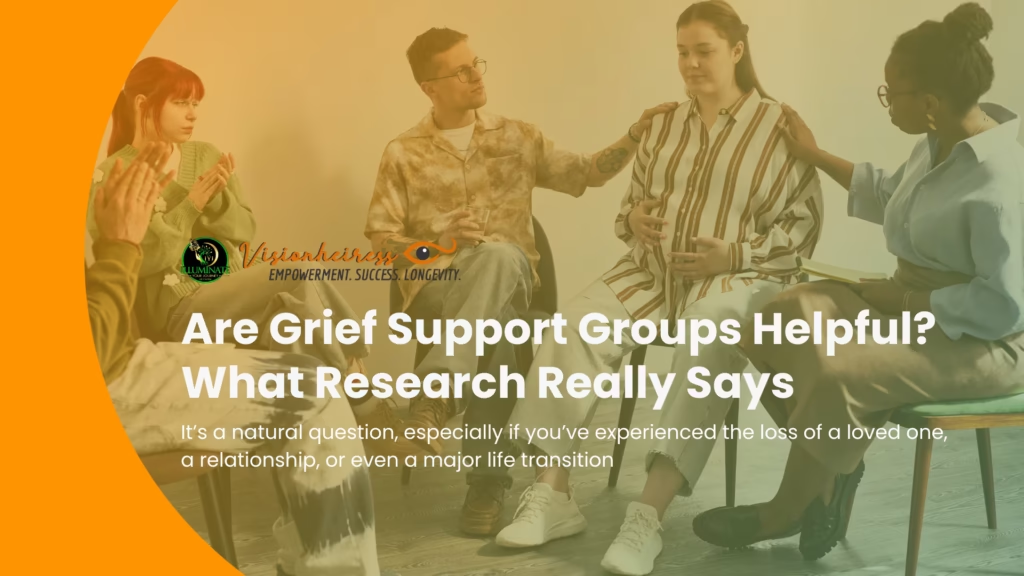
What Are Grief Support Groups?
At their core, grief support groups are safe spaces either in-person or online where individuals come together to share their experiences of loss. They are often facilitated by a grief counselor, a trained coach, or a peer who has lived through a similar loss.
The Purpose of Grief Support Groups
- To create a sense of connection with others walking a similar journey.
- To provide validation that your feelings are normal and part of healing.
- To introduce tools and strategies for coping with difficult emotions.
- To encourage storytelling as a way of releasing and processing pain.
Types of Grief Support Groups
- Open groups: Drop-in style, anyone can join at any time.
- Closed groups: A set number of sessions with the same participants.
- Topic specific groups: For loss of a spouse, child, parent, or even non-death losses like divorce or job loss.
- Online groups: Virtual sessions via Zoom or platforms like Facebook.
- Faith-based or cultural groups: Rooted in specific spiritual or cultural traditions.
Each format offers its own strengths. What matters is finding the one that resonates with your needs.
What Research Really Says About Grief Support Groups
Research consistently shows that grief support groups can help though outcomes vary depending on the group’s structure, facilitator, and participant readiness. Here are some key findings distilled into everyday language:
Emotional Benefits
- Participants often report lower levels of isolation and a sense that “I’m not alone.”
- Many experience reduced intensity of grief over time, particularly with consistent attendance.
- Groups can help individuals express emotions safely, especially if family or friends avoid talking about the loss.


Physical and Mental Health Benefits
- Grief is stressful. It can impact sleep, appetite, and even blood pressure. Groups offer coping tools that may indirectly ease these physical symptoms.
- Mental health outcomes improve for those who actively participate and feel a sense of belonging in the group.
Community and Hope
- Seeing others further along in their grief journey provides hope and perspective.
- Witnessing someone else’s progress models what healing can look like, reminding you that progress is possible.
Why Grief Support Groups Work
You might wonder, why are grief support groups helpful compared to just talking with a friend? Here’s why:
Shared Understanding
Friends may care, but unless they’ve walked through grief themselves, they may not fully get it. In a group, people nod because they do understand.
Safe Space
In a good group, you don’t have to edit yourself. Crying, venting, or even laughing at unexpected moments is all part of the journey.
Structure and Consistency
Facilitators often guide sessions with themes like coping with holidays, managing anger, or honoring anniversaries. This structure provides rhythm and predictability during a time when everything feels uncertain.
Real-Life Example: A Journey Through a Grief Support Group
Let’s imagine Maria, a woman who lost her husband suddenly. In the early days, she felt numb, unable to talk with family who kept saying, “Stay strong.” She joined a grief support group hesitantly, unsure if sharing with strangers would help.
In the first session, Maria mostly listened. Others talked about sleepless nights, panic attacks, and missing their loved one at the dinner table. To her surprise, she felt relief finally, someone understood.
Over time, Maria began sharing her own story. She learned grounding techniques from the facilitator and gained hope from a member who was two years into widowhood. By the end of three months, Maria still grieved deeply, but she also felt less alone, more capable of facing her days, and even began journaling again. Something she hadn’t done in years.
This is the power of grief support groups: they don’t erase grief, but they make the road less lonely.
Who Can Benefit Most From Grief Support Groups?
Grief support groups can be especially helpful if you:
- Feel isolated because friends or family avoid the topic of loss.
- Struggle with complicated grief (grief that feels stuck or overwhelming for months).
- Want practical tools for coping day to day.
- Need a safe, nonjudgmental space to express emotions.
- Value community and connection as part of your healing.
When Grief Support Groups May Not Be Enough
It’s important to be honest: grief support groups are not a one-size-fits-all solution.
When to Seek Additional Support
- If you’re experiencing severe depression, suicidal thoughts, or trauma responses, professional therapy or medical support is necessary.
- If you find groups overwhelming or triggering, one-on-one grief coaching or counseling may be better.
- If you prefer privacy, journaling or coaching can be a first step before joining a group.
Groups are a tool, not a cure. Healing often works best with a combination of supports.
How to Choose the Right Grief Support Group
Questions to Ask Yourself
- Do I want an in-person experience or the flexibility of online?
- Am I looking for a faith-based group or a secular one?
- Do I want a group tailored to my type of loss (child, spouse, sibling, non-death loss)?
Do I feel more comfortable with a large group or a smaller, intimate circle?
Practical Considerations
- Check if the group is free, donation-based, or fee-based.
- Ask about confidentiality policies.
Consider the facilitator’s background—trained coach, counselor, or peer support.
Practical Tools to Use Alongside a Grief Group
If you join a group, here are ways to get the most out of it:
- Keep a Grief Journal – jot down what came up during the session.
- Set an Intention – decide what you want to take away each time you attend.
- Practice Self-Care – drink water, rest, or ground yourself after an emotional session.
- Share When Ready – you don’t have to talk in the first session. Listening is healing too.
Final Thoughts: Are Grief Support Groups Helpful?
The short answer? Yes.
Grief support groups aren’t magic—they won’t erase your pain—but they can be life-giving spaces of connection, understanding, and shared hope. They remind you that grief doesn’t have to be faced alone.
Healing is not linear, and neither is grief. It comes in waves, sometimes soft, sometimes crashing. But in a grief support group, you learn that while the storm may be fierce, you don’t have to weather it alone.
If you’re ready to explore grief support or one-on-one guidance, I would love to walk alongside you.
FAQs: Common Questions About Grief Support Groups
Here are a few common questions people ask. If you don’t see what you’re looking for, feel free to reach out
Yes—especially when groups are consistent, safe, and led by someone experienced. They help build coping muscles over time, not just offer a one-time comfort.
There’s no set timeline. Some find immediate relief; others wait weeks or months. Listen to your readiness and follow your rhythm.
That’s okay. You can still participate by listening, reflecting, writing responses, or showing up when you’re ready to share verbally.
Most groups emphasize confidentiality, especially professionally facilitated ones. If privacy is a concern, ask ahead how they handle it.
Recent Post
Have Any Question?
Do not hesitate to contact me. I am here to walk you through this journey.