

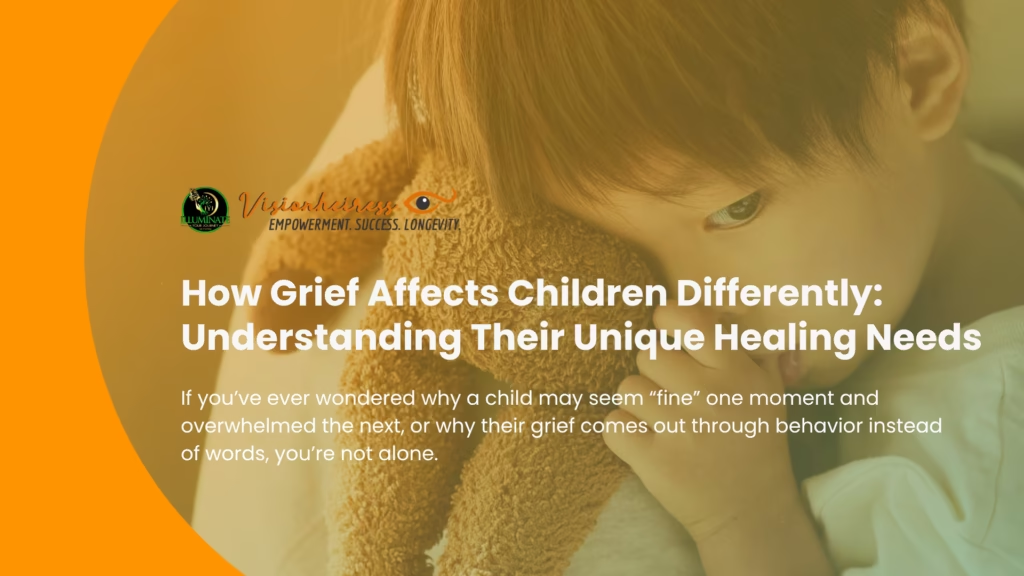
How Grief Affects Children Differently: Understanding Their Unique Healing Needs
- LaTanya Edenburgs
- Grief & Loss
Why do children grieve so differently from adults?
If you’ve ever wondered why a child may seem “fine” one moment and overwhelmed the next, or why their grief comes out through behavior instead of words, you’re not alone. Many parents, caregivers, and professionals ask: How does grief affect children differently and what signs should we look for to support them?
Grief impacts children in unique and complex ways. They may not have the emotional language adults use, and their brains are still developing the ability to process big emotions. Understanding how grief affects them and what they need to feel safe, supported, and seen is essential for long-term emotional health.
As a Master Empowerment and Healing Coach who has worked with families, children, and communities for more than 25 years, I’ve witnessed firsthand how powerful early support can be. This guide explains how grief shows up in children, why their grieving process may confuse adults, and how you can help them move toward healing.
What Makes Childhood Grief Different?
Children do not grieve in a straight line. Their grief is cyclical, resurfacing as they grow and reach new developmental stages. Unlike adults, children may not understand the permanence of death or the depth of loss. Their ability to process emotions is still forming, and their brains rely heavily on caregivers to help them make sense of their inner world.
Here are the key factors that make childhood grief different:
- Cognitive development — Children often cannot grasp abstract concepts like permanence, finality, or long-term change.
- Limited emotional vocabulary — Kids feel deeply but may not know how to express grief with words, so behaviors do the talking.
- Magical thinking — Many young children believe their thoughts or actions somehow caused the loss.
- Grief in small bursts — Children typically grieve in short waves, alternating between sadness and play.
- Re-grief cycles — As a child matures, they reprocess the loss through each new developmental milestone.
This is why supporting a grieving child requires patience, consistency, and compassionate connection.
How Children Experience Grief at Different Ages
Understanding grief through the lens of age helps you tailor support to a child’s developmental needs.
Infants and Toddlers (0–3 years)
Even without understanding death, infants feel the absence of a primary caregiver. Their grief appears through:
- Changes in sleep or eating
- Increased clinginess
- Irritability or crying
- Regression (e.g., wanting a bottle again)
Their nervous systems rely on attachment for safety, so any major disruption feels overwhelming.
Preschoolers (3–5 years)
At this age, children often believe death is temporary or reversible.
Common grief responses include:
- Magical thinking (“If I’m good, they’ll come back”)
- Asking repeated questions
- Acting out during transitions
- Fears of abandonment
- Play-based reenactment of loss
Play is their primary language. What they cannot say, they show.
School-Age Children (6–12 years)
Children begin to understand the permanence of death but may struggle emotionally.
You might see:
- Academic challenges
- Physical complaints (stomachaches, headaches)
- Increased sensitivity or anger
- Withdrawal from friends
- Perfectionism or overachievement
They may worry about their remaining caregivers’ safety and stability.
Teenagers (13–18 years)
Teens understand death intellectually, but emotionally they can feel isolated or misunderstood.
Common grief patterns:
- Risk-taking behaviors
- Difficulty concentrating
- Increased conflict
- Deep guilt or self-blame
- Withdrawal or shutting down
- Identity confusion
Teens often hide their grief to avoid burdening others. They need adults who check in consistently, even when they push away.
Children do not grieve in a straight line. Their grief is cyclical, resurfacing as they grow and reach new developmental stages. As a child matures, they reprocess the loss through each new developmental milestone. With support, grief does not have to define their future.
How Grief Shows Up in a Child’s Body, Mind, and Behavior
Children express grief holistically—through their body, emotions, thinking, and behavior. Below are signs adults should watch for.


Emotional Signs of Childhood Grief
- Sudden mood swings
- Separation anxiety
- Deep sadness or fear
- Irritability or frustration
- Emotional numbness
- Clinginess or neediness
Some children cry openly; others appear surprisingly calm. Neither response means they aren’t grieving.
Behavioral Signs
- Acting out or oppositional behavior
- Regression (bedwetting, baby talk, thumb-sucking)
- Withdrawal from activities they once enjoyed
- Difficulty following directions
- Increased sensitivity to sensory stimulation
Behavior is communication, especially when a child doesn’t have the words.
Cognitive Signs
- Trouble concentrating
- Confusion or forgetfulness
- Repetitive questions
- Preoccupation with death
- Anxiety about safety or routine
Grief interrupts a child’s sense of predictability. Their brains must work harder to feel safe.
Physical Signs
- Headaches
- Stomachaches
- Sleep difficulties
- Appetite changes
- Low energy or fatigue
Children often express emotional pain through the body.
Why Children Grieve in Bursts
One of the most misunderstood parts of childhood grief is that it comes in short waves. A child may cry deeply, then suddenly ask for a snack or want to play.
This doesn’t mean they aren’t grieving, it means:
- Their brains can only hold big emotions for short periods
- Play is their natural coping mechanism
- They revisit grief as they grow and understand the loss differently
This is called “puddle jumping” and is a completely healthy pattern.
The Importance of Safe Adults in a Child’s Grief Journey
Children cannot heal alone. They need consistent, calm, emotionally present adults.
Safe adults provide:
- Emotional regulation — Helping children co-regulate big feelings
- Language — Teaching words to describe emotions
- Stability — Predictable routines and dependable caregiving
- Modeling — Showing healthy ways to cope
- Connection — Reassurance that they are loved and not alone
When safe adults show up consistently, children gain the emotional tools needed to heal.
How Trauma Complicates Childhood Grief
Not all grief is traumatic, but when grief includes trauma such as a sudden death, accident, violence, illness, or instability the healing process becomes more layered.
Signs of traumatic grief include:
- Intense fear or intrusive memories
- Difficulty sleeping
- Avoidance of reminders
- Hypervigilance
- Flashbacks or body-based reactions
- Extreme guilt
Children experiencing traumatic grief need trauma-informed support, not just traditional comfort.
How to Support a Grieving Child: What Helps Them Heal
There is no one-size-fits-all approach, but there are proven strategies that provide comfort, stability, and healing.
1. Create a Language for Emotions
Help children name what they feel:
- “It sounds like you’re feeling sad today.”
- “Your tummy hurts, sometimes worry feels like that.”
- “I see that you’re frustrated. I’m here with you.”
Naming emotions reduces fear and confusion.
2. Maintain Routines and Predictability
Stability helps children feel safe. Keep:
- Bedtime routines
- School schedules
- Mealtimes
- Daily structure
Consistency creates emotional grounding.
3. Encourage Play-Based Expression
Play helps children process emotions safely.
Use:
- Art
- Drawing
- Music
- Storytelling
- Puppets
- Role play
This is why programs like play-based grief support are profoundly healing.
4. Validate Their Experience
Say things like:
- “It’s okay to feel sad.”
- “I’m here for you.”
- “You’re not alone in this.”
Avoid minimizing phrases such as “Be strong” or “You’ll get over it.”
5. Give Age-Appropriate Honesty
Children need truth they can understand.
Avoid vague explanations like “went to sleep” or “went away.”
Be gentle, but clear.
6. Watch for Signs They Need Extra Support
Seek professional help if you notice:
- Extreme withdrawal
- Self-harm behaviors
- Nightmares or sleep refusal
- Persistent anxiety
- Aggression
- Decline in school performance
When in doubt, supportive guidance is always beneficial.
How Grief Changes as Children Grow
One of the most important truths about childhood grief is this:
Children re-grieve as they grow.
A loss from age 5 may “return” at age 10, 15, or 18 because:
- Their understanding deepens
- Their identity evolves
- Their needs change
- New milestones trigger new grief
Grief becomes part of their story but with support, it does not have to define their future.
When Caregivers Are Grieving Too
Children often look to adults for cues.
When caregivers are grieving:
- Children may feel responsible for comforting the adult
- They may hide their own emotions
- The home may feel unstable
- Communication may decrease
This is why community support, coaching, and healing programs can change everything.
Children need shared spaces where healing happens together.
How Illuminate Your Journey Supports Grieving Children and Families
At Illuminate Your Journey, we understand that children experience grief differently and they deserve spaces designed specifically for their healing needs.
Our coaching and programs provide:
- Trauma-informed strategies
- Emotional regulation tools
- Play-based activities
- Safe, judgment-free conversations
- Support for parents and caregivers
- Healing guidance rooted in connection, faith, and empowerment
Healing is not about erasing the pain it’s about helping children discover hope, resilience, and safety within themselves.
Final Thoughts: Children Need Connection, Not Perfection
If a child in your life is grieving, know this:
- You don’t have to be perfect
- You don’t need all the answers
- You don’t have to “fix” their grief
What children need most is presence.
A compassionate adult who listens, guides, and supports without rushing the process can change their entire healing journey.
Let’s Walk This Healing Journey Together
If you’re supporting a grieving child—or grieving alongside them—you’re not alone.
Illuminate Your Journey is here to help you create stability, connection, and emotional healing.
📩 Email: info@iyrjcoaching.com
💛 Start your healing journey today: https://iyrjcoaching.com/contact-us/
You and your child deserve support, understanding, and tools that last a lifetime.
Frequently Asked Questions
Here are a few common questions people ask. If you don’t see what you’re looking for, feel free to reach out.
There is no timeline. Children reprocess grief as they grow, and support should evolve with each stage.
Use simple, honest language. Avoid metaphors and give age-appropriate explanations. Offer space for questions.
Children often grieve through behavior instead of emotions. Watch for changes in sleep, behavior, school performance, or physical symptoms.
If grief impacts daily functioning, causes intense fear, or leads to self-harm behaviors, consult a grief-informed professional.
There is no timeline. Children reprocess grief as they grow, and support should evolve with each stage.
Use simple, honest language. Avoid metaphors and give age-appropriate explanations. Offer space for questions.
Children often grieve through behavior instead of emotions. Watch for changes in sleep, behavior, school performance, or physical symptoms.
If grief impacts daily functioning, causes intense fear, or leads to self-harm behaviors, consult a grief-informed professional.
Recent Post
Have Any Question?
Do not hesitate to contact me. I am here to walk you through this journey.